
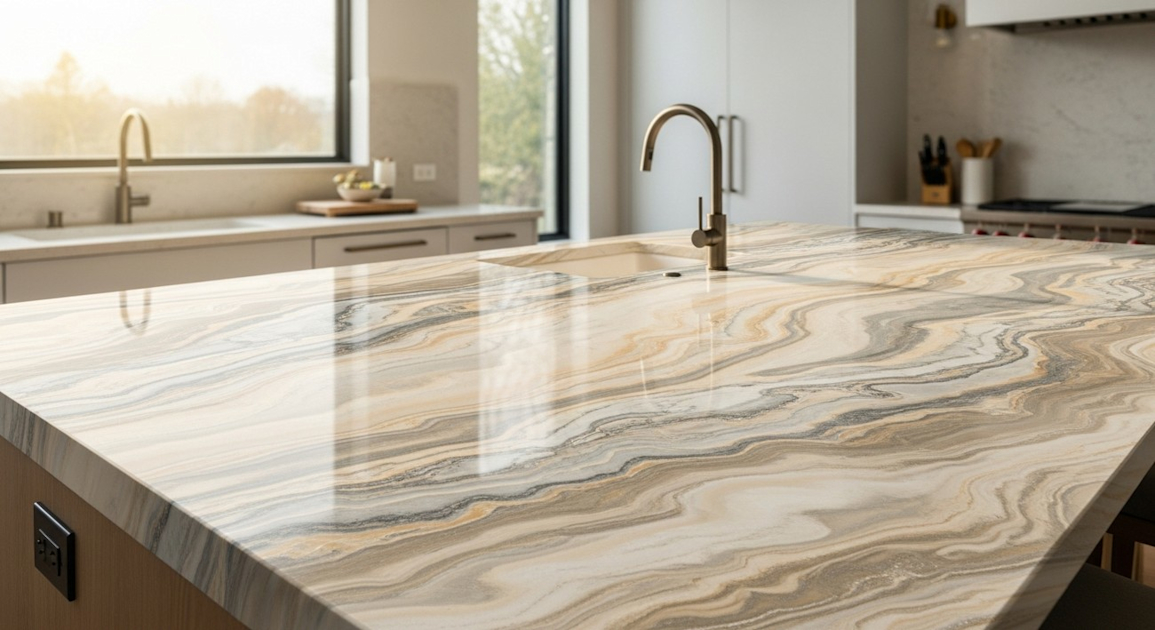


When you think of the Taj Mahal, images of the majestic mausoleum in India might come to mind, but for homeowners and interior designers, Taj Mahal Quartzite holds a different charm. This gorgeous, durable natural stone captures the fantasy of elegance while offering practical benefits that make it a popular choice for countertops, flooring, and various interior applications.
What is Taj Mahal Quartzite?
Taj Mahal Quartzite is a natural stone, distinguished by its extraordinary beauty and versatile nature. Unlike quartz, which is a manufactured material, quartzite is a metamorphic rock formed from sandstone under intense heat and pressure. This transformation creates a sparkling, crystal-rich stone that retains its stunning natural features.
Quarried primarily in Brazil, Taj Mahal Quartzite boasts a creamy, off-white base with subtle veins swirling in hues of gray, gold, and taupe, reminiscent of fine marble. Yet, it stands out by offering greater toughness, comparable to that of granite.
Benefits of Choosing Taj Mahal Quartzite
Taj Mahal Quartzite has been steadily gaining popularity in upscale residential and commercial projects. Here are several reasons why this glamorous stone might be perfect for your space:
Aesthetic Appeal: With its unique pattern and color variations, Taj Mahal Quartzite provides a sophisticated look that can complement a variety of design styles, from traditional to modern minimalist.
Durability: Known for its hardness, it resists scratching, etching, and chipping better than marble, making it an ideal choice for high-traffic areas like kitchens and bathrooms.
Heat Resistance: This durable stone withstands high temperatures, so you won’t have to worry about setting hot pots and pans directly on its surface.
Low Maintenance: With periodic sealing, Taj Mahal Quartzite maintains its beauty and resistance to staining. Simple daily cleaning with mild soap and water is usually sufficient.
Applications of Taj Mahal Quartzite
Countertops
Taj Mahal Quartzite's exquisite look and robust nature make it an ideal material for kitchen and bathroom countertops. Its warmth and timeless appeal provide a luxurious feel, while its durable surface stands the test of time against typical wear and tear.
Flooring
Using Taj Mahal Quartzite for flooring brings a cohesive and elegant touch to any space. Its slip resistance and resilience against heavy foot traffic make it a popular choice for both residential and commercial properties.
Wall Cladding and Backsplashes
Bring texture and depth to your walls with Taj Mahal Quartzite. As a statement backsplash in a kitchen or an accent wall in a living room, it enhances the dimension of any room and acts as an awe-inspiring focal point.
Integrating Taj Mahal Quartzite into Design
While this stone is often appreciated for its natural elegance, how it’s combined with other elements can make or break the overall aesthetic. Here’s how you can seamlessly include Taj Mahal Quartzite into your design:
Pair with Neutral Tones: Enhance the natural beauty of the stone by pairing it with soft, neutral color palettes. White, cream, and beige complement the stone's subtle veining.
Contrast with Darker Hues: For a dramatic contrast, consider partnering it with darker cabinetry or accents. This can create a striking visual balance.
Mix Material Textures: Taj Mahal Quartzite pairs beautifully with wood and metal finishes, adding complexity and layers to any design.
Incorporate Bold Elements: Use bold, vibrant accessories or feature a striking piece of art to add personality and flair to spaces dominated by the more muted tones of the quartzite.
Caring for Taj Mahal Quartzite
Though low-maintenance, ensuring the longevity of Taj Mahal Quartzite requires some care:
Sealing: Regular sealing provides an added layer of protection against stains and moisture. It's recommended to reseal every one to two years, although the frequency might vary based on usage and stone finish.
Cleaning: A soft cloth, warm water, and mild soap are all you need for daily cleaning. Avoid harsh chemicals or abrasive cleaners.
Preventive Measures: Use trivets or hot pads for cookware and cutting boards for food prep, even with its heat resistance and scratch resistance.
Taking Inspiration from Real Spaces
Explore the versatility of Taj Mahal Quartzite through inspiring real-life examples that exhibit its multifaceted appeal. From chic coastal kitchens to urban-lux bathrooms, its adaptability is truly unparalleled.
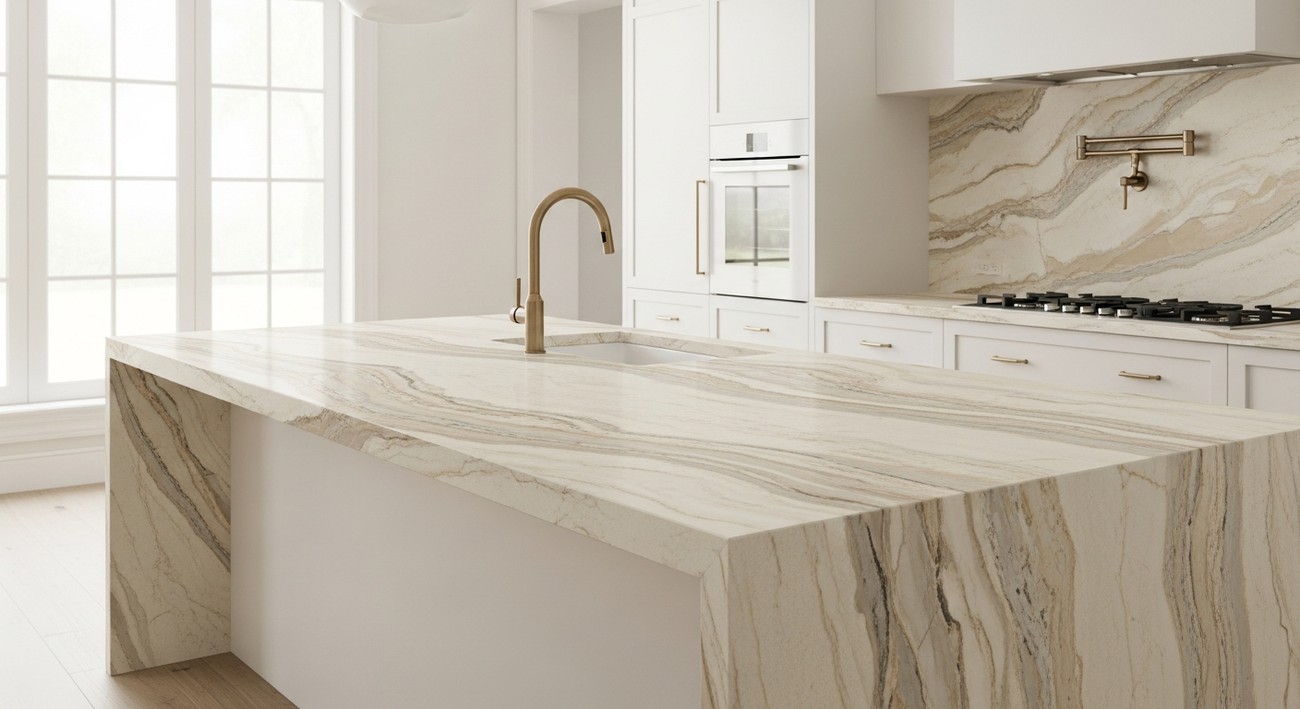
Contemporary Home in Miami: This stunning residence uses Taj Mahal Quartzite throughout the open plan kitchen, with waterfall edges and matching backsplash, exuding modern elegance.
Rustic Mountain Retreat: Accentuating natural materials, this cabin integrated Taj Mahal Quartzite in floor-to-ceiling fireplaces, harmonizing with wooden beams and large windows showcasing breathtaking views.
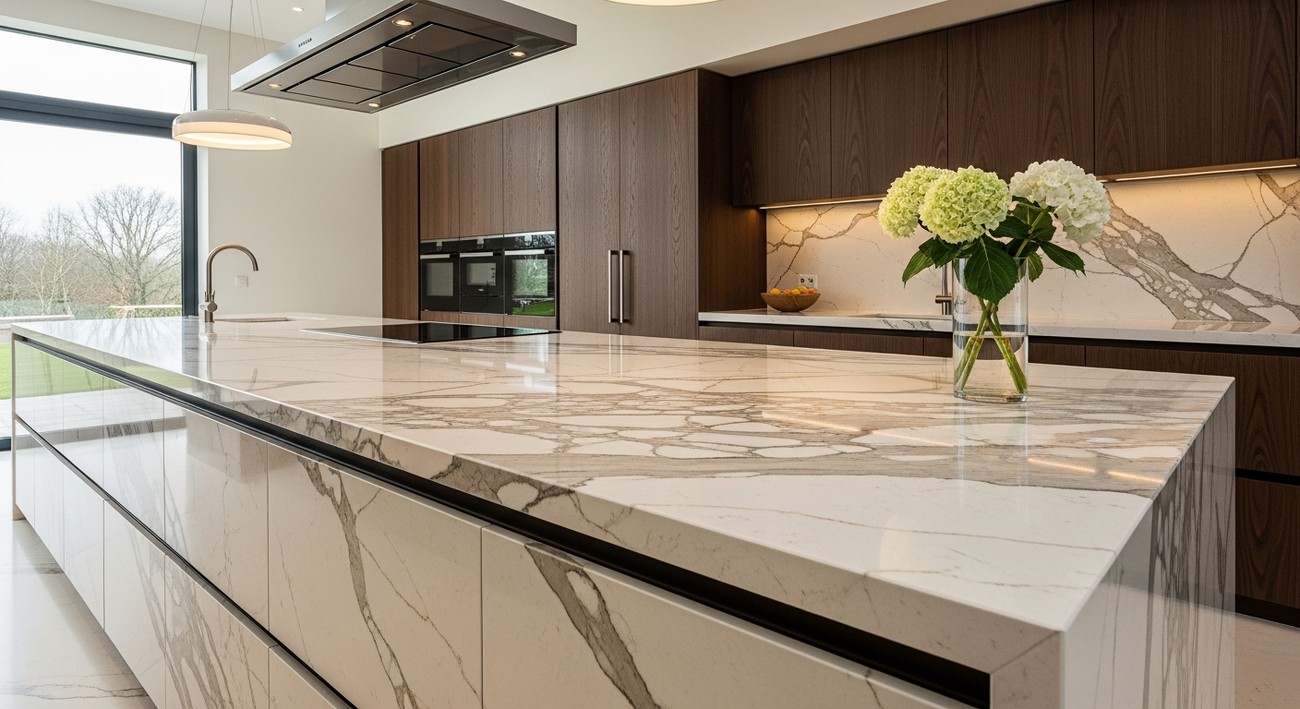
Frequently Asked Questions about Taj Mahal Quartzite
How is Taj Mahal Quartzite formed?
Taj Mahal Quartzite is a stunning natural stone formed from sandstone and quartz under extreme heat and pressure over millions of years. This geological process transforms the stone into a highly durable and dense material, suitable for various applications. Its cream and white base with subtle, yet striking, veins mimic the luxurious look of marble, making it a popular choice for homeowners and designers alike.
Is Taj Mahal Quartzite durable enough for kitchen countertops?
Absolutely, Taj Mahal Quartzite is an excellent choice for kitchen countertops due to its high durability and resistance to heat, scratches, and etching. Unlike marble, which can be prone to scratching and staining, Taj Mahal Quartzite is much harder and doesn’t etch easily when in contact with acidic substances. Its resilience makes it perfect for high-traffic areas where spills and heavy kitchen usage are common.
How does Taj Mahal Quartzite compare to granite?
Taj Mahal Quartzite is often compared to granite due to its durability and aesthetic qualities. While both are natural stones, quartzite is generally more resistant to scratching and weathering than granite. Additionally, Taj Mahal Quartzite often features a more marble-like appearance with its elegant and subtle veining, which can appeal more to those searching for a sophisticated look. Both require sealing to enhance their stain resistance, but the luxurious appearance of Taj Mahal Quartzite often makes it a favored choice.
Does Taj Mahal Quartzite require sealing?
Yes, Taj Mahal Quartzite should be sealed to maintain its pristine condition. Although it is more resistant to staining compared to marble, sealing this beautiful stone enhances its natural resistance to spills and stains from everyday kitchen items like oil and wine. Regularly sealing, typically once or twice a year, will prolong the life and beauty of Taj Mahal Quartzite.
How should I clean and care for Taj Mahal Quartzite surfaces?
Cleaning Taj Mahal Quartzite is simple and straightforward. Use a mild soap or stone cleaner with warm water for daily cleaning. Avoid abrasive scrubbers that can scratch the surface, and steer clear of acidic or harsh chemical cleaners that might degrade the seal over time. For tougher stains, make sure to clean the spills promptly and use a pH-balanced cleaner designed for natural stone to protect your Taj Mahal Quartzite.
Does Taj Mahal Quartzite have color variations?
Yes, Taj Mahal Quartzite showcases a range of hues and patterns, all of which possess a natural and luxurious appeal. The predominant colors are creams, whites, and beiges, often accented with subtle gold, gray, or brown veining. These natural variations mean that each slab is distinct, offering a unique aesthetic tailored to your space while maintaining an exquisite and sophisticated look synonymous with Taj Mahal Quartzite.
What are the popular uses of Taj Mahal Quartzite in home design?
Taj Mahal Quartzite is incredibly versatile, making it ideal for various applications, both indoors and outdoors. Popular uses include kitchen countertops, backsplashes, bathroom vanities, and fireplace surrounds. It's also utilized for floor tiles, wall cladding, and outdoor patios. The stone's timeless elegance and durability make it a top choice for spaces where both beauty and practicality are essential, allowing it to seamlessly fit into a range of design styles.
Can Taj Mahal Quartzite be used outdoors?
Yes, Taj Mahal Quartzite is suitable for outdoor use due to its resilience against natural elements. It can be used for outdoor kitchens, patios, and pool surrounds. This natural stone withstands weathering and temperature changes, maintaining its stunning appearance over time. Its resistance to ultraviolet rays ensures it won't discolor, making it an excellent choice for outdoor installations.
Are there any special considerations for installing Taj Mahal Quartzite?
When installing Taj Mahal Quartzite, it's crucial to work with a professional to ensure proper cutting, sealing, and fitting. Due to its hardness, the stone can be challenging to cut, which is why expert installation is recommended. Proper sealing before and after installation prevents moisture absorption and preserves its aesthetic qualities. With expert handling, your Taj Mahal Quartzite will become a striking and durable element of your home.
Exploring the Pros and Cons of Taj Mahal Quartzite
Pros
Visually Stunning
Taj Mahal Quartzite is often hailed for its breathtaking beauty. It comes with a soft, creamy background interspersed with subtle veins of gold, beige, and sometimes light brown. This gives it an elegant and timeless appeal that resembles the classic look of marble without the same level of maintenance. Its neutral yet sophisticated appearance makes it a versatile choice that can complement both modern and traditional designs.
Durability
One of the standout features of Taj Mahal Quartzite is its durability. As a natural stone, it is significantly harder than granite. This means it can withstand the daily wear and tear of active kitchens, making it a great option for countertops. Its resistance to scratches and etching is a major advantage over softer stones like marble.
Heat Resistance
Thinking about placing hot pots or pans directly on your countertop? With Taj Mahal Quartzite, you don’t have to worry about heat damage. This stone can handle high temperatures, which adds a layer of practicality for those who love cooking or tend to entertain guests often.
Low Maintenance
Unlike some other natural stones, Taj Mahal Quartzite doesn’t demand intensive upkeep. With a proper sealant applied during installation, it becomes resistant to stains and less porous, which means you won’t have to seal it as frequently as marble or granite. Routine cleaning with a mild dish soap and water is generally all it needs to keep its beauty intact.
Unique Pattern
Each slab of Taj Mahal Quartzite is unique. The natural formation of the stone results in distinct patterns and variances in color, so you can be sure your countertop or flooring is one-of-a-kind. This is a big draw for those who appreciate unique artistic elements in their home decor.
Cons
Costly Investment
Let's not sugarcoat it—Taj Mahal Quartzite can be expensive. While it’s not as high-priced as some rare marbles, it still requires a significant budget. The cost reflects not only the beauty and quality of the stone but also the detailed process required to extract and prepare it for installation. This may be a turn-off for budget-conscious renovators.
Installation Challenges
The hardness that makes Taj Mahal Quartzite so durable can also pose a challenge during installation. It requires precise cutting and specialized tools, which means you’ll need to hire experienced professionals to handle the job. This can increase the overall cost and time of your renovation project. Plus, any mistakes in installation can be costly to fix.
Cold Surface
While the stone's cool-to-the-touch feel can be refreshing, especially in warmer climates, it may not be as cozy during colder months. Consider this if you plan to use it extensively in areas where you’ll frequently be in contact with the surface, like tabletops or kitchen counters.
Limited Color Options
Although the stone's natural patterns and colors are beautiful, if you are looking for vibrant or varied color options, Taj Mahal Quartzite might fall short. Its palette is limited to neutral shades, which may not suit everyone’s design needs, especially if you’re aiming for a bold, colorful interior.
Requires Regular Sealing
Even though it is relatively low maintenance compared to other natural stones, Taj Mahal Quartzite still requires periodic sealing to maintain its stain resistance and luster. This means planning for the long-term maintenance and care of your investment to ensure its longevity and beauty.
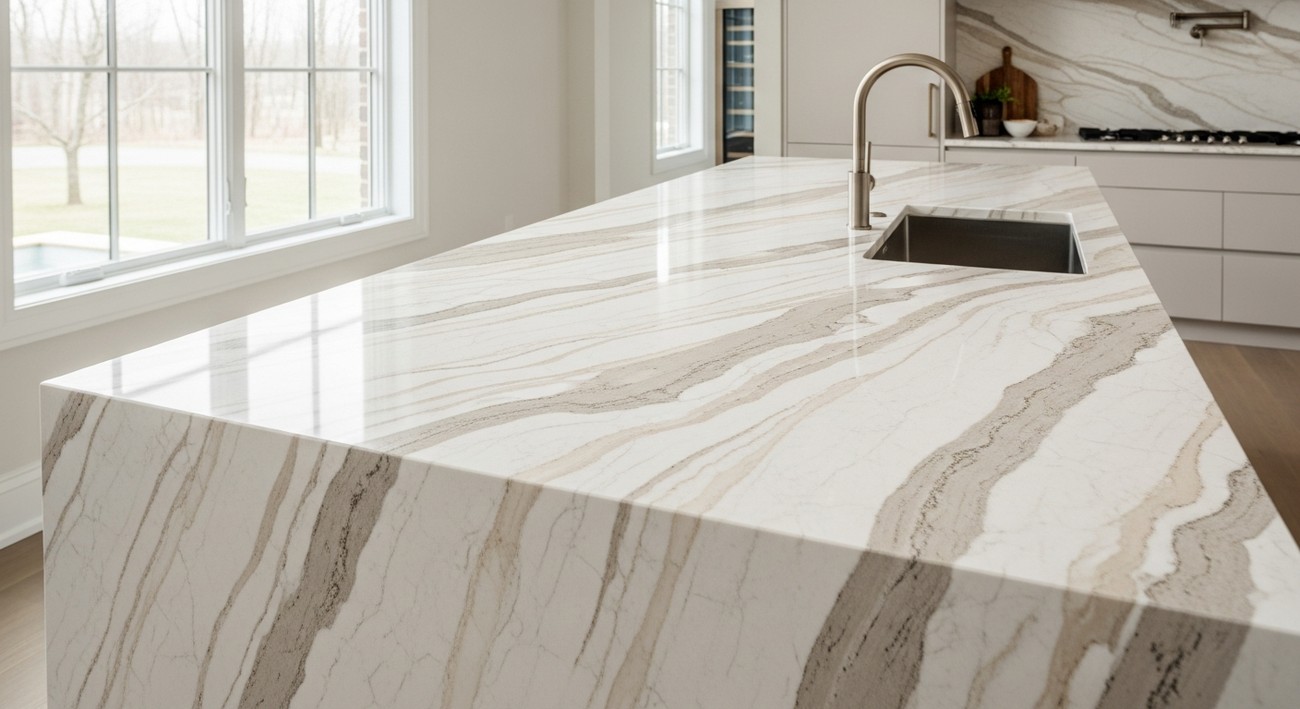
Maintenance Tips
Daily
Start your day with a quick spot check. Wipe down surfaces with a microfiber cloth and warm water to remove any spills or crumbs. This not only keeps your countertop looking pristine but also prevents staining. Use a pH-balanced, non-abrasive cleaner specifically designed for stone care to tackle stubborn spots. Avoid acidic or harsh chemical cleaners that can dull the surface over time.
Tools Needed:
- Microfiber cloth
- Warm water
- pH-balanced stone cleaner
Weekly
Dedicate some time each week to give your Taj Mahal Quartzite a more thorough clean. Mix a gentle soap with water to create a mild cleaning solution. Use a soft cloth or sponge to apply the solution across the surface, then rinse with clean water to prevent soap residue. Finish by drying the stone with a clean, dry towel to avoid any water spots.
Tools Needed:
- Mild dish soap
- Soft sponge
- Clean, dry towel
Monthly
Every month, inspect your quartzite surfaces for any signs of wear and tear. Look for etch marks, dull spots, or small scratches. Consider applying a stone sealer to provide an extra layer of protection against spills and stains, especially in high-traffic areas. Always follow the manufacturer's instructions for the best results.
Tools Needed:
- Stone sealer
- Soft cloth
- Inspection checklist
Yearly
Once a year, you should consider a professional assessment of your quartzite surfaces. This can help identify minor issues before they become major problems. A professional can perform more intensive cleaning and resealing if needed, ensuring the stone remains in top condition.
When to Call a Professional:
- Noticeable etching or deep staining
- Widespread dullness or large scratches
- Sealing needs reassessment
Warning Signs to Watch For
Keep an eye out for changes in your Taj Mahal Quartzite that might indicate any potential issues. Dull spots, persistent stains, or visible damage require immediate attention. These could be signs that your surface needs sealing or that improper cleaning methods have been used.
How to Extend Lifespan
To maximize the lifespan of your Taj Mahal Quartzite, avoid placing hot pans directly on its surface; always use trivets or heat mats. Use cutting boards to prevent scratches, and wipe up spills immediately to stop any potential staining. Regular sealing, based on the product's guidelines, plays a key role in preserving the stone’s beauty.
Final Thoughts
Taj Mahal Quartzite is a stunning choice for any home, combining elegance and durability with its beautiful soft hues and striking patterns. Whether you're considering it for countertops, backsplashes, or flooring, we encourage you to explore how this unique stone can enhance your space.
If you’re in Kirkland, WA, and thinking about upgrading your home with Taj Mahal Quartzite, our team at New Day Construction is here to help. We’d love to chat about your vision and how we can bring it to life. Don't hesitate to reach out to us to schedule a consultation or request a free estimate — we’re excited to assist you on your journey to creating a beautiful home.


