Homeowner's Guide to Builders Risk Insurance in Washington State
I'm Sam Brenich, Chief Marketing Officer at New Day Construction. Builder's risk insurance is one of those details that can get overlooked while homeowners are focused on the construction project itself. This guide explains what the coverage is designed to protect, who may be responsible for buying it, what it can cost, and how to verify a contractor's registration and insurance in Washington before signing a contract.
Quick Takeaways:
- Builder's risk insurance protects the structure and covered materials while construction is underway
- A standard homeowners policy may not fully cover a major remodel, addition, ADU, or new home during construction
- Builder's risk is separate from a contractor's general liability insurance and workers' compensation coverage
What Is Builders Risk Insurance?
Builder's risk insurance policies, also called course of construction insurance, protect a building and cover building materials while construction is underway. These policies are temporary and generally remain in effect for the construction period as opposed to renewing like a standard homeowners policy. Depending on the policy, the insurance coverage can include the structure, fixtures, equipment, and materials waiting to be installed. Homeowners, contractors, developers, and lenders may all have a financial interest in the project, so the construction contract should clearly state who is responsible for obtaining the coverage before work begins.
Builders Risk Insurance Is Not Contractor Insurance
Builder's risk insurance protects covered property and materials from physical loss. It's separate from both a contractor's general liability insurance, which addresses third-party bodily injury and property damage claims, and workers' compensation coverage for injuries involving employees at the construction site. A contractor can hold both liability and workers' comp and still leave a homeowner without builder's risk protection if nobody purchased that separate policy.
What Does Builders Risk Insurance Typically Cover?
Builder's risk is designed to protect the property and materials tied to a construction project if they are damaged by a covered event. The exact protection depends on the policy, and some policies may also cover materials before they are installed or while they are being moved to the job site. I would check the actual coverage instead of relying on the policy name, because the important question is what would be protected if something went wrong during construction.
Does Homeowners Insurance Cover a Home During Construction?
Not necessarily. A homeowners policy may provide some protection during a renovation, but major construction can change both the value of the home and the risks the property is exposed to. Large remodels, additions, and ground-up construction may require changes to the existing policy, sometimes through an endorsement or separate builder's risk insurance coverage, depending on the insurer and the scope of work. Homeowners should contact their insurance carrier before construction begins just to be sure their existing policy will cover the project. Travelers, for example, advises homeowners to review their coverage before a renovation because larger improvements can change the amount and type of protection needed.
What Builders Risk Insurance Usually Does Not Cover
Builder's risk does not cover every construction loss. Flood or earthquake coverage may need to be added separately depending on the policy, which is worth checking in Washington. The Washington Department of Natural Resources reports that about 30 earthquakes greater than magnitude 5 have been felt in the state over roughly the past 150 years. Policies may also exclude the cost of correcting defective work, while coverage for damage that results from that work depends on the specific policy language. Builder's risk is property coverage, so it should not be confused with workers' compensation or the contractor's general liability insurance.
Who Buys Builders Risk Insurance: The Homeowner or the Contractor?
The property owner, contractor, or another party with a financial interest in the project may purchase builder's risk coverage. A lender can also require coverage and set conditions for the policy. The important part is not assuming who has it. The construction contract should identify who is responsible for obtaining builder's risk, and the homeowner should confirm that responsibility before work starts.
How to Verify Your Contractor's Insurance and Registration in Washington
Washington registers construction contractors under RCW 18.27, so ask for the contractor's registration number and confirm that it's active through the Department of Labor and Industries. To register, a contractor must maintain at least $200,000 in public liability coverage and $50,000 in property damage coverage, or a $250,000 combined single limit. General contractors must also post a $30,000 surety bond, while specialty contractors must carry a $15,000 bond. Ask for a current certificate of insurance and independently verify the contractor's registration, bond, and insurance status through Washington L&I. You should also confirm whether the builder's risk insurance is included in the construction contract or expected to be purchased separately.
How Much Does Builders Risk Insurance Cost?
There is no single price for builder's risk insurance because insurance companies price the premium based on the project's completed value, location, construction type, length, deductible, and coverage options. As an approximate national budgeting benchmark, Insureon reports that builder's risk policies typically cost about 1% to 4% of the total completed project value. That figure should be treated as a general reference rather than a Washington-specific quote because actual residential remodel and new-construction premiums depend on the project and the policy being purchased. A modest remodel typically costs less to insure than a ground-up custom home, and factors such as project duration, materials, location, deductible, and selected coverage can affect the premium. Renovation projects may also require different coverage from ground-up construction when the existing structure needs protection during the work.
What Are Builders Risk Soft Costs?
Soft costs are additional expenses that can arise when a covered loss delays completion of the project. Construction-loan interest is one example. Extended professional fees or other carrying costs may also qualify depending on the policy. They are not automatically covered by every builder's risk policy, so I would check whether soft-cost coverage is included and what limits apply rather than assuming delay-related expenses are part of the base policy.
How Much Builders Risk Coverage Do You Need?
The right coverage limit should reflect what could actually be lost during construction. New construction is usually insured based on the completed construction value, including labor and materials but excluding the land. Remodels are more complicated because the existing house may or may not be included in the builder's risk policy, so that is one of the first things I would verify with the carrier.
The total limit is not the only number worth checking. Custom finishes or higher-value materials can increase the amount that would have to be replaced after a loss. Washington's Office of the Insurance Commissioner found that two-thirds of the homeowners who lost their homes in the 2023 Gray and Oregon Road wildfires were underinsured. That finding relates to homeowners insurance rather than builder's risk specifically, but it is a useful reminder that the policy limit needs to reflect the actual value at risk, not just look sufficient on paper.
Builders Risk for Remodels, Additions, ADUs, and New Homes
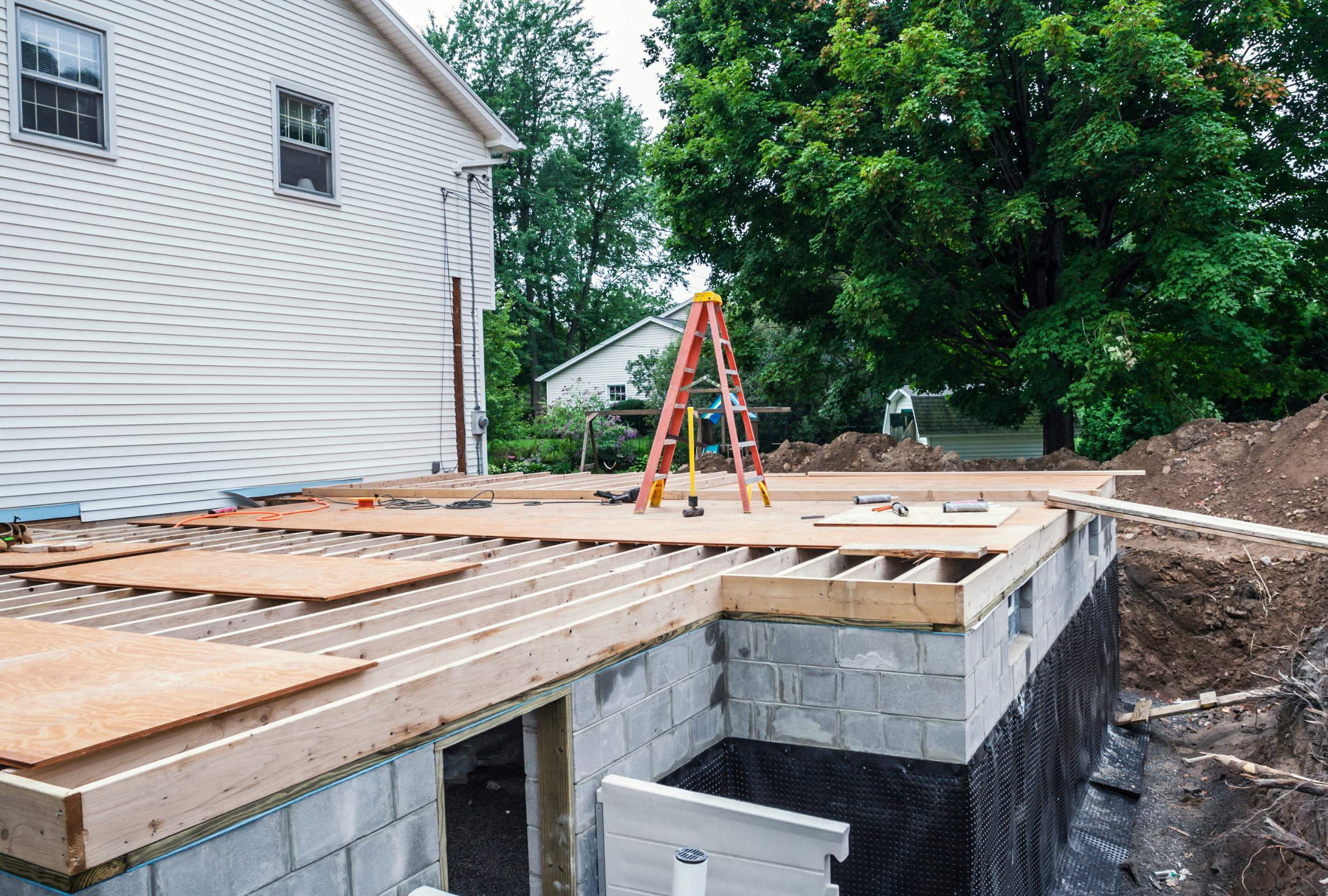
The need for builder's risk insurance doesn't disappear just because a project isn't a ground-up new build. A major remodel or addition that opens up the structure, removes a roof section, or leaves the home more exposed than usual carries real risk during construction. A ground-up detached ADU is new construction, while converting an existing basement, garage, or other part of the home into an ADU is a renovation. The insurance questions can be different, so the type of ADU project matters. Smaller cosmetic remodels that don't open up the building envelope have less risk.
Builders Risk Insurance for Projects in Greater Seattle and Snohomish County
Seattle-Tacoma gets measurable precipitation on about 156 days a year. A construction project can therefore spend a significant part of its schedule dealing with wet weather before the exterior is fully closed in. I would keep that in mind when looking at builder's risk coverage, especially if the work will continue through fall or winter.
Snohomish County has seen serious wind events as well. The county's Hazard Mitigation Plan notes that the November 2024 bomb cyclone produced a 49 mph gust at Arlington Airport and left about 135,000 Snohomish PUD customers without power. A storm like that can hit while a project is still under construction, so the policy end date should follow the real construction schedule rather than an optimistic completion date.
Why Builders Risk Matters More as the Project Gets Bigger
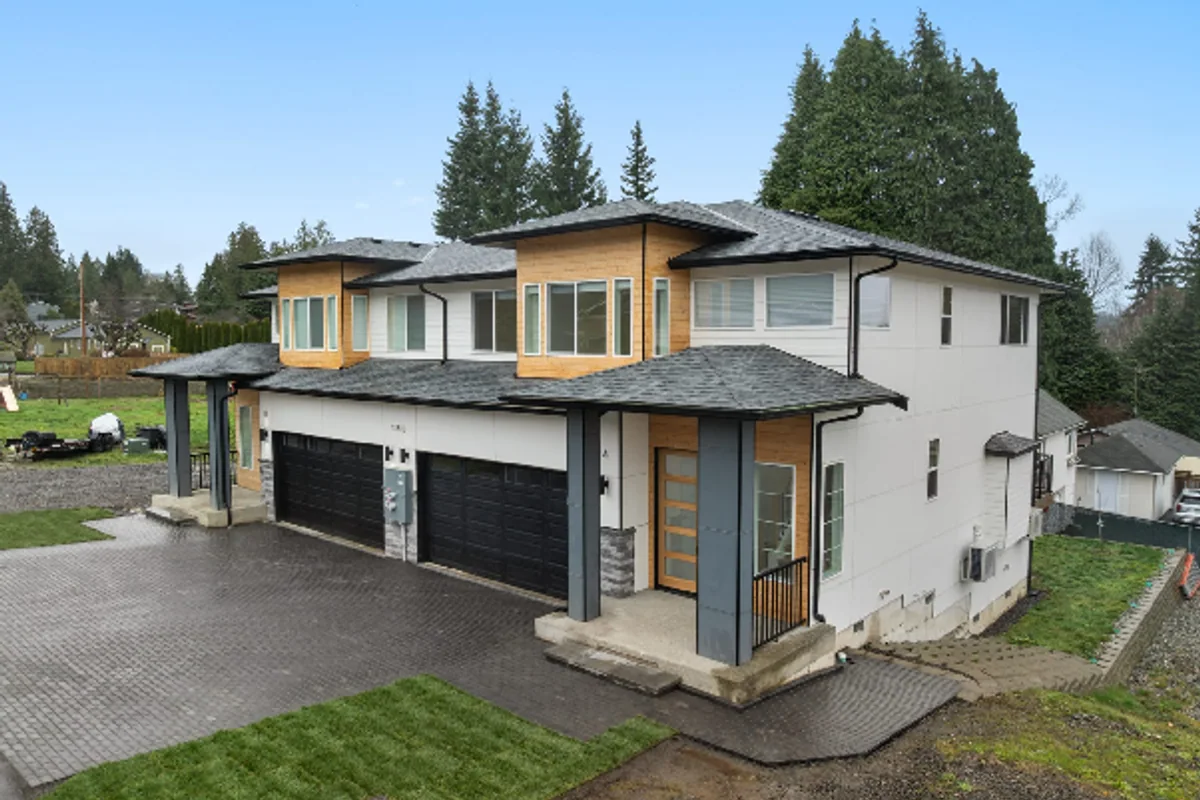
Our custom multi-family duplex in Lake Stevens shows how quickly the value exposed during construction can grow. This was a ground-up multi-unit project, not a cosmetic remodel, so much more of the property value was tied up in active construction. The insurance arrangement itself depends on the project and the policy, but a build at this scale is exactly where that question should be settled early.
See Our Custom Multi-Family Duplex Construction in Lake Stevens, WA.
Planning a Remodel, Addition, ADU, or New Home in Washington?
Homeowners usually spend plenty of time reviewing plans and working through the budget before signing a construction contract. Builder's risk deserves the same attention. I would get one answer in writing before construction starts: who is responsible for buying the policy? Your insurance carrier can then confirm whether the coverage fits the project and whether the limit is high enough.
Call New Day Construction at (425) 522-5748 or book a free consultation to discuss your project.
Frequently Asked Questions
What kind of insurance do I need during home construction?
The right insurance helps keep a construction-phase loss from turning into a financial setback on top of the delay itself. At minimum, confirm what property coverage applies during construction and verify your contractor's general liability and workers' compensation coverage. Depending on the project, builder's risk coverage, additional liability protection, or soft-cost coverage may also be worth discussing with your insurance agent.
Should I ask my contractor for proof of insurance?
Yes. Ask the contractor for a current certificate of insurance and independently verify the contractor's registration, bond, and insurance status through Washington L&I before signing the contract. Providing proof of insurance is a routine part of working with a registered contractor. Washington L&I provides a contractor verification system for checking registration information.
What is proof of homeowners insurance?
Proof of homeowners insurance is typically a declarations page or other documentation from your carrier showing that your policy is active and identifying its coverage and limits. It is not the same as proof of builder's risk insurance because construction coverage depends on the specific homeowners policy, project, and any separate builder's risk coverage purchased.
What is builder's risk insurance and what does it cover?
Builder's risk insurance covers buildings and materials during construction as a temporary form of property coverage. Depending on the policy, it may protect against losses caused by fire, wind, theft, lightning, hail, vandalism, and other covered perils. It does not replace a contractor's general liability or workers' compensation coverage.
How does builder's risk insurance compare to standard homeowners insurance during construction?
A homeowners policy may continue to provide some protection during a renovation, but major construction can change the risks and the amount of coverage needed. Builder's risk insurance is designed specifically for property exposed during construction, so homeowners should confirm with their carrier how the existing homeowners policy and any construction coverage apply to their project.
What should I confirm about my contractor's insurance?
Confirm that the contractor's Washington registration is active under RCW 18.27, request a current certificate of insurance, verify the contractor's bond and liability insurance through Washington L&I, and clarify in writing whether builder's risk insurance is included in the contract or needs to be purchased separately.